
In the constantly shifting digital terrain, the cybersecurity threats confronting small and medium-sized enterprises (SMEs) have grown increasingly complex and distressingly common. For SMEs based in the UK, these challenges are exacerbated by distinct pressures: rigorous regulatory frameworks, the brisk pace of London’s business ecosystem, and frequently constrained resources to counter these cyber threats effectively. In this context, where each click might precipitate a security breach, sustaining a formidable cybersecurity stance is simultaneously a priority and a challenge for these enterprises. Integrating robust IT support services into their cybersecurity strategies has become essential for UK SMEs, ensuring they navigate this digital landscape with confidence and resilience.

Enter the strategic solution: Outsourcing Incident Response.
This approach is not merely a trend but a necessity in today’s climate, offering a lifeline to businesses ensnared by the complexities of cyber threats and the scarcity of in-house cybersecurity expertise. Outsourcing incident response equips SMBs with a dedicated team of experts poised to detect, investigate, and respond to cyber incidents promptly and efficiently. It’s a pivotal strategy that allows businesses to leverage specialised knowledge and cutting-edge technology, ensuring they can not only anticipate threats but also mitigate them with precision while keeping the focus on their core operations.
For UK SMBs, considering Outsourcing Incident Response is about enhancing their cybersecurity framework and strategically investing in their sustainability and growth. As we delve deeper into the benefits and considerations of this approach, it becomes evident that outsourcing incident response is not merely a protective measure but a competitive advantage in the digital domain.
The Rising Need for Outsourcing Incident Response:
Navigating the digital landscape, the UK’s small and medium-sized businesses (SMBs) face an unprecedented cybersecurity challenge. The necessity for Outsourcing Incident Response has never been more critical, driven by two primary factors: the escalating complexity of cyber threats and the inherent constraints of limited budgets and resources. This section delves into these compelling reasons, underlining why outsourcing incident response has transitioned from a strategic choice to an essential need for SMBs.
The Escalating Complexity and Volume of Cyber Threats
- Sophisticated Cyber-Attacks: Cyber threats have evolved, becoming more sophisticated and harder to detect. Advanced persistent threats (APTs), ransomware, and phishing attacks are just the tip of the iceberg and require specialised knowledge to combat effectively.
- Increased Incidents: The sheer volume of security incidents has surged, overwhelming in-house teams. SMBs often find themselves in a constant battle to keep up with alerts, leading to alert fatigue and the potential for critical warnings to go unnoticed.
- Specialised Expertise Requirement: Modern cyber threats necessitate a level of expertise and technological resources that many SMBs lack internally. Outsourcing provides access to dedicated professionals at the forefront of cybersecurity trends and threat intelligence.
Constraints of Limited Budgets and Resources
- Budget Limitations: SMBs often operate with stringent budgets, particularly in competitive markets like London. Allocating sufficient funds to staff a full-time, in-house incident response team can be financially impractical.
- Resource Scarcity: There’s a notable shortage of cybersecurity professionals beyond financial constraints. This scarcity makes it challenging for SMBs to recruit and retain the skilled personnel necessary for effective incident response.
- Operational Priorities: SMBs must focus their limited resources on core business activities. Investing in an in-house cybersecurity team can divert attention and funds from critical business operations and growth opportunities.
The Advantages of Outsourcing Incident Response for SMBs:
Outsourcing Incident Response presents a compelling array of advantages for small and medium-sized businesses (SMBs), particularly those navigating the complex cybersecurity environment of the UK. By turning to external experts, SMBs can fortify their defences against cyber threats in a cost-effective and strategically advantageous manner. Here, we explore the key benefits of this approach, underpinning why it has become an essential strategy for businesses aiming to safeguard their operations without compromising their focus or finances.
Access to Specialised Expertise
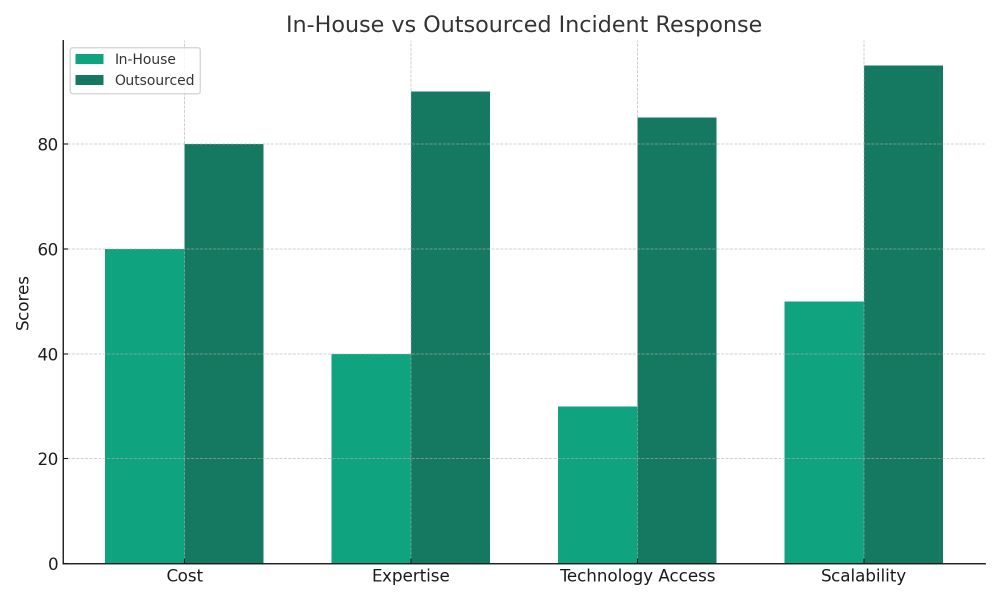
- Immediate Expertise Without Overheads: Outsourcing incident response provides SMBs instant access to a team of cybersecurity experts with the latest knowledge and tools. This access eliminates the need for costly recruitment, training, and retention processes associated with building an in-house team.
- Advanced Tools and Technologies: External incident response teams bring advanced cybersecurity tools and technologies, often out of reach for many SMBs due to inflated costs or complexity. This includes state-of-the-art threat detection and response platforms, continually updated to counteract new and evolving threats.
- Continuous Monitoring and Support: Outsourced teams offer round-the-clock monitoring and support, ensuring that threats are identified and addressed promptly, regardless of when they occur. This level of vigilance is challenging to achieve with an in-house team without significant investment.
Cost-Effectiveness
- Reduced Financial Burden: The costs associated with maintaining a full-time, in-house cybersecurity team can be prohibitive for SMBs. Outsourcing incident response transforms these fixed costs into variable costs, aligning cybersecurity expenses more closely with actual needs and usage.
- Scalability: As businesses grow or face varying levels of cyber threat activity, outsourced services can be scaled accordingly, ensuring that cybersecurity measures are efficient and economical. This flexibility is particularly advantageous for SMBs that experience seasonal fluctuations in business volume.
- Focus on Core Business Functions: By outsourcing cybersecurity responsibilities, SMBs can reallocate financial and human resources to core business activities, driving growth and innovation without the distraction of managing complex cybersecurity operations.
Enhanced Cyber Resilience
- Faster, More Effective Incident Response: External experts specialise in rapidly identifying and mitigating cyber threats, reducing the time between detection and response. This speed and efficiency minimise potential damages, including downtime, data breaches, and reputational harm.
- Proactive Threat Hunting: Outsourcing incident response often includes proactive threat hunting services, where experts actively search for potential threats before they manifest into incidents. This proactive approach further enhances an SMB’s cyber resilience, protecting against known threats and emerging vulnerabilities.
- Compliance and Best Practices: External cybersecurity teams ensure that incident response activities are aligned with industry standards and regulatory requirements, an essential consideration for UK businesses navigating the complex landscape of GDPR and other compliance obligations.
Outsourcing incident response offers SMBs a strategic pathway to bolster their cybersecurity posture. It provides access to specialised expertise and advanced technologies, delivers cost efficiencies, and enhances overall cyber resilience, enabling businesses to focus on their core operations while ensuring that their cyber defences are robust and responsive.
Key Considerations When Outsourcing Incident Response:
When venturing into the realm of outsourcing incident response, selecting the right partner becomes a pivotal decision for small and medium-sized businesses (SMBs), especially those operating within the dynamic cybersecurity landscape of the UK. This choice not only influences the effectiveness of your cyber defences but also the overall resilience of your business. Here are key considerations to guide SMBs through the process, ensuring that the chosen Managed Service Provider (MSP) aligns with their specific needs and challenges. Leveraging IT Consultancy Services has become a cornerstone for SMEs looking to fortify their defences against the increasingly complex cyber threats in today’s digital world.
Choosing the Right Partner
- Understanding the UK’s cybersecurity landscape: It’s crucial to partner with a service provider with a deep understanding of the UK’s cybersecurity environment, including compliance regulations such as GDPR. This knowledge ensures that the incident response strategies are effective and align with local legal requirements.
- Experience with SMBs: The chosen MSP should have a proven track record of working with SMBs, demonstrating an ability to tailor their services to meet smaller businesses’ unique challenges and constraints. This experience indicates a provider’s capability to offer scalable and flexible solutions that can grow with your business.
- Technical Expertise and Reputation: Evaluate potential partners based on their technical expertise in incident response and their reputation in the industry. Look for reviews, case studies, and testimonials from other SMBs to gauge their reliability and effectiveness in managing cybersecurity threats.
Customisation and Flexibility
- Tailored Solutions: The one-size-fits-all approach does not apply to cybersecurity. Your MSP should offer customised incident response services that consider your business’s specific operational needs, threat landscape, and cybersecurity goals. Server Consultancy, for instance, prides itself on crafting bespoke solutions that align with each client’s unique requirements.
- Scalable Services: As your business evolves, so will your cybersecurity needs. The ability to scale services up or down in response to your current situation or threat level is essential, ensuring that you’re not overpaying for unnecessary services or under-protected during peak times.
Collaboration and Communication
- A Collaborative Approach to Security: Effective incident response outsourcing is built on a foundation of collaboration between your business and the MSP. Your chosen partner should work closely with your in-house team, sharing insights, strategies, and updates to ensure a unified approach to cybersecurity.
- Clear Communication Channels: Regular, clear communication is paramount in a successful outsourcing partnership. This includes updates during and after an incident response routine reports and strategic meetings to discuss ongoing and future cybersecurity postures. The ability to easily communicate with your MSP ensures you’re always informed and in control of your cybersecurity strategy.
Selecting the right MSP for outsourcing incident response involves carefully assessing their understanding of the UK’s cybersecurity landscape, their experience with SMBs, and their ability to offer customised, scalable solutions. Additionally, fostering a collaborative relationship with clear communication channels is essential for ensuring that your business’s cybersecurity needs are met with precision and agility. By considering these factors, SMBs can establish a robust partnership with an MSP like Server Consultancy, enhancing their cyber resilience while focusing on their core business operations.
How to Seamlessly Integrate Outsourced Incident Response into Your Business:
Integrating outsourced Incident Response (IR) services into your business operations requires a strategic approach to ensure a seamless transition and minimal disruption. For small and medium-sized businesses (SMBs) in the UK, this integration is crucial for maintaining operational continuity while enhancing cybersecurity posture. Here, we outline actionable steps designed to facilitate the smooth incorporation of outsourced IR services tailored to the unique landscape of UK businesses.
Step 1: Conduct a Thorough Needs Assessment
- Identify Your Cybersecurity Goals: Define what you aim to achieve by outsourcing IR services. Clear goals will guide the integration process, whether it’s to enhance your cyber resilience, comply with UK-specific regulations, or ensure round-the-clock security monitoring.
- Assess Current Capabilities: Evaluate your existing cybersecurity processes and resources. Understanding your current state will highlight areas that will benefit most from outsourced expertise.
Step 2: Select a Partner Aligned with Your Business Needs
- Compatibility Check: Choose an MSP that understands the nuances of the UK’s cybersecurity environment and has experience working with SMBs. Their services should offer the flexibility to tailor their approach to your business needs and challenges. With the right Server Support, businesses can ensure their critical infrastructure is secure, resilient, and optimised for performance, safeguarding against potential vulnerabilities.
- Verify Credentials: Ensure the MSP has the necessary certifications and a proven track record in effectively managing incident responses. This step is crucial for establishing trust and ensuring quality service.
Step 3: Establish Clear Communication and Collaboration Channels
- Integration Meetings: Hold initial meetings between your team and the MSP to align on goals, expectations, and processes. These meetings should establish the foundation for ongoing communication and collaboration.
- Designate Points of Contact: Assign clear points of contact on both sides to facilitate efficient communication. This ensures that any concerns or changes can be addressed promptly.
Step 4: Develop an Integrated Incident Response Plan
- Collaborative Planning: Work with your MSP to develop an incident response plan that integrates seamlessly with your existing processes. This plan should outline roles, responsibilities, and procedures for responding to cybersecurity incidents.
- Customised to Your Business: The plan should be tailored to the specifics of your business operations, industry requirements, and compliance obligations within the UK. Deploying Defender for Endpoint provides an additional layer of security, offering advanced threat protection capabilities crucial for detecting, investigating, and responding to cyber threats.
Step 5: Implement a Phased Roll-Out
- Pilot Phase: Start with a pilot phase, integrating the MSP’s services into a controlled portion of your business operations. This approach allows for adjustments to be made before a full-scale roll-out.
- Feedback Loop: Establish a feedback loop based on the pilot phase outcomes. Use this feedback to refine processes and communication strategies before expanding the service integration across your business.
Step 6: Conduct Regular Reviews and Adjustments
- Performance Reviews: Schedule regular reviews with your MSP to assess the performance of the outsourced IR services. These reviews should consider the effectiveness of the incident response, the efficiency of communication, and the overall impact on your cybersecurity posture.
- Continuous Improvement: Use insights gained from performance reviews to make ongoing adjustments to your IR strategies. This ensures that your cybersecurity measures align with emerging threats and business growth.
By following these steps, SMBs can effectively integrate outsourced Incident Response services into their business operations, enhancing their cybersecurity capabilities with minimal disruption. This strategic approach not only strengthens your defences against cyber threats but also supports your business’s growth and adaptation in the ever-changing cybersecurity landscape of the UK.
Conclusion:
Outsourcing incident response presents a compelling solution for small and medium-sized businesses (SMBs) navigating the intricate landscape of cyber threats amidst constraints in resources and budgets. This strategic move not only elevates the cybersecurity posture of SMBs by granting access to specialised expertise and advanced technologies but also proves to be a cost-effective alternative to maintaining an in-house team. The advantages of outsourcing incident response—from enhanced cyber resilience to economic efficiency—underscore its potential as a game-changer for businesses facing the growing complexity of cyber threats and the necessity for agile, expert-driven responses.
Choosing an IT support company in London that understands UK SMEs’ unique challenges can transform a business’s approach to cybersecurity, offering tailored solutions that protect against evolving threats. Moreover, outsourcing incident response allows businesses to realign their focus on their core operations, ensuring that their cybersecurity needs are expertly managed. This strategic reallocation of focus and resources is not just about mitigating risks; it’s about empowering businesses to thrive without the overheads and distractions of managing complex cyber threats in-house.
Call to Action:
For SMBs in London and across the UK, the journey towards enhanced cybersecurity and operational efficiency begins with choosing the right partner. Server Consultancy stands ready to offer personalised consultations and bespoke solutions tailored to your business’s unique challenges and needs. Our expertise in the UK’s cybersecurity landscape, combined with a deep understanding of the needs of SMBs, positions us as your ideal partner in outsourcing incident response.
We invite you to contact Server Consultancy for a detailed discussion on how we can assist in fortifying your cybersecurity defences, allowing you to concentrate on confidently growing your business. Our team is equipped to provide the specialised expertise and support necessary to navigate the complexities of today’s cyber threats, offering peace of mind and a strategic advantage in a competitive marketplace.