
In London’s competitive hospitality sector, small and medium-sized businesses (SMBs) handle vast amounts of sensitive guest information every day. From personal contact details and booking records to payment card data and individual guest preferences, this information is at the heart of delivering exceptional service. However, in today’s digital landscape, the importance of Data Security for Hospitality SMBs in London cannot be overstated.
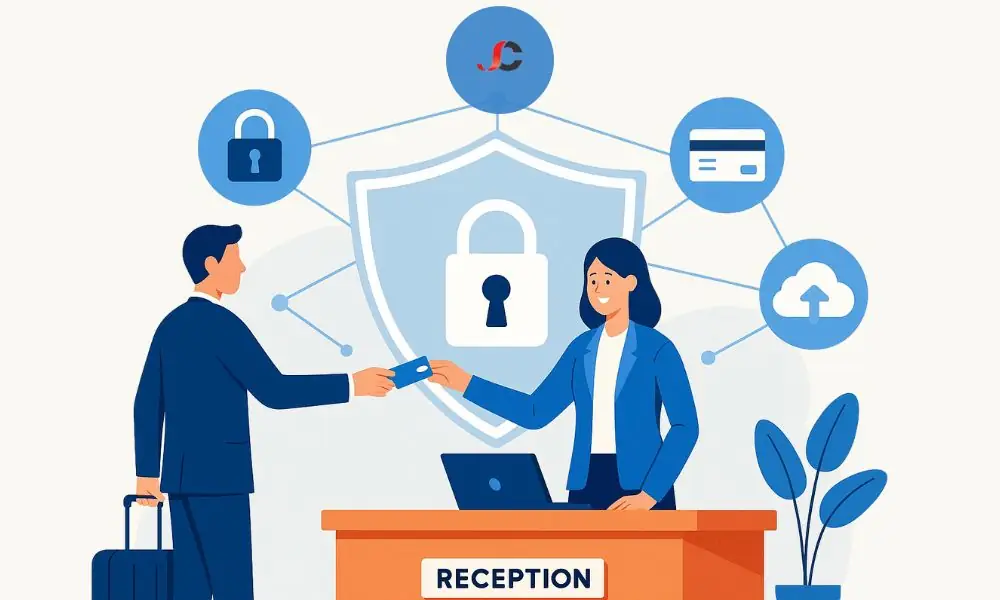
Cyber threats are becoming increasingly sophisticated, and hospitality SMBs are frequent targets due to the value of the data they store. A single incident of data compromise can trigger severe outcomes, including monetary losses, damage to reputation, and legal costs linked to the UK’s GDPR. Protecting guest information is no longer a matter of best practice — it is a legal, operational, and ethical necessity.
To safeguard data effectively and maintain customer trust, hospitality SMBs in London must adopt robust, proactive security measures. Installing antivirus software alone is insufficient; a complete, tailored security plan from knowledgeable IT support professionals is essential to meet the hospitality industry’s needs.
Key priorities for hospitality SMBs include:
- Preventing unauthorised access to sensitive systems and networks.
- Ensuring compliance with GDPR and other relevant regulations.
- Protecting payment processes against fraud and data theft.
- Maintaining guest confidence through visible and adequate security measures.
By focusing on a well-structured strategy for data security for hospitality SMBs, backed by expert IT support, businesses can not only defend against cyber threats but also strengthen their reputation as trusted providers in a highly competitive market.
Why Data Security for Hospitality SMBs in London Matters
Hospitality SMBs in London manage a wide range of sensitive guest information daily. This data is not only essential for delivering personalised services but also highly valuable to cybercriminals. The importance of Data Security for Hospitality SMBs in London lies in ensuring this information remains safe, secure, and compliant with regulations.
Types of sensitive guest information include:
- Identifiable data, including names, street addresses, and contact numbers.
- Financial information, including payment card numbers and billing details.
- Booking and travel records with dates, locations, and service preferences.
- Special requests and preferences, such as dietary needs or accessibility requirements.
- Loyalty programme data and associated customer histories.
If this data is compromised, the consequences can be significant and long-lasting.
Risks of inadequate data security:
- Cyber-attacks: Hospitality SMBs are prime targets for phishing, malware, and ransomware attacks that can compromise guest data.
- Reputational damage: Damage to guest trust can bring fewer bookings and poor press coverage, affecting visibility both on and offline.
- Financial penalties: Non-compliance with the UK GDPR may lead to heavy fines and costly compensation payouts.
- Operational disruption: Data breaches often require costly investigations, system downtime, and resource-intensive recovery processes.
For data security for hospitality SMBs in London, protecting guest data is not simply a compliance requirement; it is a business-critical responsibility. A strong Data Security for Hospitality SMBs, tailored to the industry’s unique challenges, can prevent breaches, protect brand reputation, and ensure long-term customer loyalty.
Common Cybersecurity Threats in the Hospitality Sector
The hospitality industry faces unique security challenges due to the variety of systems and data it manages. For this reason, data security for hospitality SMBs in London requires a proactive approach to defend against both common and emerging threats.
Cyber-attacks targeting POS systems and IoT devices
- Point-of-sale (POS) systems store and process valuable payment information, making them a prime target for cybercriminals. Attacks can include the installation of malware to intercept card data during transactions.
- Smart locks, automated guest room systems, and internet-linked security cameras fall under IoT devices, which are regularly overlooked during security preparations. If poorly secured, these devices can be exploited to gain access to wider business networks.
Phishing attacks and insider threats
- Phishing emails are a persistent threat, aiming to trick employees into revealing login credentials or clicking on malicious links.
- High employee turnover within hospitality businesses often leads to a greater chance of insider incidents, intentional or otherwise. Former employees retaining access to systems can inadvertently or deliberately cause data breaches.
Fragmented IT systems increase vulnerabilities.
- Hospitality SMBs often rely on multiple, loosely integrated systems for reservations, payments, customer relationship management, and facility operations.
- This fragmentation creates gaps in security coverage, making it easier for cybercriminals to exploit vulnerabilities between systems.
Without a comprehensive and unified approach to IT security, hospitality SMBs in London remain exposed to these risks. By addressing these vulnerabilities, organisations can lay the groundwork for solid data security for hospitality SMBs that protects guest trust and fulfils regulatory obligations.
Understanding the Regulatory Landscape
For hospitality SMBs in London, meeting data protection requirements is a legal duty and fundamental to maintaining customer confidence. Knowing the laws and compliance standards that shape data security for hospitality SMBs is critical for safeguarding information and reducing the risk of costly repercussions.
UK GDPR requirements for personal data protection
- The UK GDPR provides a legal framework that dictates how personal information must be collected, stored, processed, and disclosed.
- Hospitality SMBs must ensure that data is gathered lawfully, used only for its intended purpose, and kept secure throughout its lifecycle.
- Individuals have the legal right to view, correct, or erase their data, and organisations must act on such requests within defined deadlines.
Role of PCI DSS in safeguarding payment card data
- PCI DSS acts as a defined framework to help businesses keep payment card transactions safe from breaches.
- For hospitality SMBs, this means implementing measures such as encrypting cardholder data, restricting access to payment systems, and regularly testing security processes.
- While PCI DSS focuses specifically on payment data, it complements broader GDPR requirements by ensuring that financial transactions are protected.
How compliance supports legal obligations and guest confidence
- Meeting regulatory requirements helps prevent fines, legal disputes, and operational disruptions caused by non-compliance.
- Demonstrating compliance reassures guests that their personal and payment information is handled responsibly and securely.
- Strong adherence to both UK GDPR and PCI DSS not only protects the business but also enhances its reputation, encouraging repeat bookings and positive reviews.
By aligning operational practices with these regulations, hospitality SMBs in London can strengthen their overall data protection strategy and build lasting trust with their customers.
The Role of IT Support for Data Security for Hospitality SMBs in London
Adequate IT support plays a vital role in ensuring strong and reliable data security for hospitality SMBs in London. Managed IT solutions integrate advanced technical capabilities with industry knowledge to protect guest data, uphold compliance, and minimise the chances of a breach.
Assessing risks and mapping data flows.
- Managed IT providers start by performing comprehensive assessments to detect vulnerabilities in both processes and technology.
- Data flow mapping helps pinpoint precisely where and how guest information is collected, stored, processed, and shared.
- Understanding these flows allows security measures to be applied at every stage, reducing the likelihood of data loss or unauthorised access.
Implementing encryption, secure backups, and safe data disposal
- Encryption ensures that both stored and transmitted data is unreadable to anyone without proper authorisation.
- Regular, secure backups safeguard critical information against loss from hardware failure, cyberattacks, or accidental deletion.
- Secure data disposal processes, such as certified wiping of drives and physical destruction of storage devices, prevent sensitive information from being recovered once it is no longer needed.
Managing firewalls, intrusion detection, and access controls
- Firewalls act as a protective barrier between the internal network and external threats, blocking suspicious activity before it causes harm.
- Intrusion detection systems monitor network activity for signs of malicious behaviour, enabling rapid response to potential attacks.
- Multi-factor authentication improves system protection by demanding verification through two or more authentication factors.
- Network segmentation restricts access to sensitive information by dividing systems, so a breach in one section cannot affect the whole network.
By partnering with experienced IT support providers, hospitality SMBs in London can create a tailored, multi-layered security strategy that protects guest data, meets regulatory requirements, and supports long-term business resilience.
Best Practices for Protecting Guest Data
Protecting guest information is essential for maintaining trust and ensuring compliance in the hospitality sector. A clear and structured approach to data security for hospitality SMBs in London can help reduce the risk of breaches while supporting smooth day-to-day operations.
Data minimisation and proper data lifecycle management
- Collect only the information that is necessary for delivering services.
- Avoid retaining guest data for longer than required, and establish clear retention policies.
- Apply secure disposal methods to remove data permanently when it is no longer needed, ensuring it cannot be recovered.
Ongoing employee training and insider threat prevention
- Provide regular training to ensure staff can identify phishing attempts, handle data securely, and follow best practices.
- Ensure sensitive information is available solely to employees essential to its use in their roles.
- Revoke access promptly when staff leave the business to prevent unauthorised use of systems.
Securing payment systems and protecting POS devices
- Use payment systems that comply with PCI DSS standards to safeguard financial transactions.
- Keep POS software updated and apply security patches promptly.
- Physically secure POS devices to prevent tampering and monitor for any suspicious activity.
Safeguarding guest-facing apps, cloud platforms, and Wi-Fi networks
- Apply advanced authentication measures to mobile apps and web portals to ensure accounts are only accessible to verified users.
- Use secure cloud services with encryption to store and process guest data.
- Separate guest Wi-Fi from internal business networks and apply strong passwords with regular updates to prevent unauthorised access.
By following these best practices, hospitality SMBs in London can strengthen their defences, maintain guest trust, and ensure they remain compliant with data protection regulations.
Advanced Technologies and Future-Ready Strategies
As cyber threats evolve, hospitality SMBs must adopt innovative solutions to strengthen their defences. Leveraging advanced technology is essential for maintaining strong data security for hospitality SMBs in London, ensuring protection against both current and emerging risks.
Using AI-driven threat detection for real-time monitoring
- Artificial intelligence (AI) can analyse network traffic and detect unusual activity far faster than traditional methods.
- Real-time monitoring allows for immediate alerts and rapid responses to potential breaches, reducing the window of opportunity for cybercriminals.
- Past incident data enables AI security tools to improve their accuracy in spotting and preventing malicious activity.
Applying biometric authentication for access control
- Biometric verification, such as face or fingerprint recognition, offers robust protection by relying on an individual’s unique physical markers.
- These systems reduce reliance on passwords, which are vulnerable to theft or misuse.
- Biometric authentication can be applied to both staff logins and sensitive on-site systems, adding an extra layer of protection.
Segmenting IoT networks to reduce attack surfaces
- Internet of Things (IoT) devices, including smart locks, guest room controls, and connected security cameras, should operate on separate network segments.
- Segmentation prevents attackers from using one compromised device to access the entire network.
- Regular updates and monitoring of IoT devices further enhance overall system security.
By adopting these advanced strategies, hospitality SMBs in London can create a forward-looking security posture that not only addresses present threats but also adapts to the challenges of tomorrow.
Action Plan for Hospitality SMBs in London
Strengthening data security for hospitality SMBs in London requires a structured, proactive approach. By following a clear action plan, businesses can protect guest information, meet compliance requirements, and minimise the risk of breaches.
Conduct a risk assessment
- Identify potential vulnerabilities in systems, processes, and data handling practices.
- Map out how guest information is collected, stored, processed, and shared.
- Prioritise high-risk areas for immediate improvement.
Encrypt and back up data
- Ensure data security for hospitality SMBs by encrypting data both when it is saved and when it is sent.
- Schedule regular, secure backups to prevent loss from cyber-attacks, hardware failures, or accidental deletion.
- Store backups in secure, off-site or cloud-based environments.
Implement multi-factor authentication
- Increase login safety by adding several layers of identity verification.
- Require this across all staff profiles, especially for accounts handling critical data or administrative functions.
- Regularly review authentication settings to ensure they remain effective.
Train staff and test incident response
- Provide ongoing cybersecurity solutions training so staff can recognise and respond to threats.
- Develop and practise an incident response plan to ensure swift action during a breach.
- Conduct simulated security drills to identify gaps and refine procedures.
Review security policies regularly
- Update data security for hospitality SMBs to align with evolving cyber threats and regulatory changes.
- Reassess data handling processes to ensure ongoing compliance with GDPR and industry standards.
- Keep all security documentation clear, accessible, and easy for staff to follow.
By implementing this action plan, London can build a strong and adaptable data security for hospitality SMBs that safeguards guest data and protects the business from reputational and financial harm.
Why Partnering with a London-Based MSP Matters
For hospitality SMBs in London, achieving strong and reliable data protection is not always possible with in-house resources alone. An MSP with expertise in the hospitality field and an understanding of local compliance standards can be instrumental in protecting data security for hospitality SMBs in London.
Benefits of working with a sector-focused MSP
- In-depth knowledge of hospitality-specific systems, such as booking platforms, POS solutions, and guest management tools.
- Expertise in meeting UK GDPR requirements and other industry standards, ensuring compliance at every stage with data security for hospitality SMBs.
- Ability to adapt security measures to suit both boutique establishments and larger multi-site operations.
Tailored security solutions and proactive monitoring
- Development of customised strategies for data security for hospitality SMBs that address the unique needs and vulnerabilities.
- Implementation of advanced protection measures, including encryption, multi-factor authentication, and secure payment systems.
- Monitor endpoints, networks, and systems in real time to detect and neutralise threats swiftly.
Ongoing support and scalability
- Continuous security updates to keep pace with evolving cyber threats.
- A dedicated team on hand to deliver rapid solutions and maintain business continuity.
- Scalable systems designed to expand with the business, ensuring security remains strong over time.
By partnering with an experienced London-based MSP, data security for hospitality SMBs can benefit from expert guidance, reliable protection, and the confidence that guest data is secure, allowing them to focus on delivering exceptional service without compromising on security.
Conclusion
Protecting guest information is no longer an optional consideration — it is a business-critical responsibility. Strong data security for hospitality SMBs in London is essential for meeting compliance requirements, safeguarding customer trust, and ensuring uninterrupted business operations. In a sector where reputation and reliability are vital, even a single breach can result in lasting damage, both financially and reputationally.
Data security for hospitality SMBs faces unique challenges, from managing high volumes of sensitive data to maintaining secure systems across multiple points of access. This makes it essential to adopt a proactive and comprehensive security strategy that addresses current risks while preparing for emerging threats.
Key takeaways for hospitality SMBs include:
- Compliance with UK GDPR and PCI DSS safeguards against legal and financial penalties.
- Consistent protection of guest data strengthens brand reputation and customer loyalty with data security for hospitality SMBs.
- Proactive security measures help prevent costly disruptions to day-to-day operations.
By investing in expert IT support and modern security solutions, hospitality SMBs in London can stay ahead of evolving cyber threats, protect their most valuable asset — guest trust — and ensure the long-term stability of their business. Taking action today is the most effective way to secure a safer, more resilient tomorrow with data security for hospitality SMBs.
Why is data security for hospitality SMBs in London such a big deal?
In the hospitality industry, your guest data is your lifeline—and your most significant vulnerability. From booking details and payment information to personal preferences, you handle sensitive data every single day. Unfortunately, data security is the silent killer of hospitality brands—breaches often go unnoticed until the damage is done. Cybercriminals target hotels, restaurants, and hospitality SMBs because they know guest data is a goldmine. Without strong hotel cyber security measures, one breach can result in reputational damage, regulatory fines, and lost customer trust. This is why many businesses turn to Server Consultancy, the best IT support company in London, to build robust defences and keep operations secure with data security for hospitality SMBs.
How can SMBs in hospitality ensure ongoing data protection?
Ongoing protection isn’t just about installing antivirus software—it’s about creating a culture of data security for hospitality SMBs. This means:
-Regularly updating and patching your booking and POS systems.
-Using secure payment gateways.
-Providing staff training to recognise and avoid phishing attempts.
-Implementing encryption for stored and transmitted data.
-Carrying out periodic security audits.
Partnering with a trusted provider like Server Consultancy, the best IT support company in London, ensures your data security for hospitality SMBs in London evolves with emerging threats and regulatory changes.
Is compliance with data regulations enough to protect my business?
While complying with GDPR and other hospitality data regulations is critical, it’s not a guarantee that your business is safe. Cyber threats evolve faster than laws, and meeting compliance standards doesn’t always address the latest risks. Guest data security the silent killer of hospitality brands, shows how easily businesses can be lulled into a false sense of security. Just because you’re “compliant” doesn’t mean you’re secure. Criminals exploit gaps in real-time protection, and hotels that rely solely on compliance checklists often discover vulnerabilities too late. Working with Server Consultancy, the best IT support company in London, ensures you go beyond compliance—implementing proactive measures like intrusion detection, endpoint protection, and encrypted communications.